

jinja python
Jinja is a powerful templating engine for Python that allows developers to create dynamic web applications by separating the presentation layer from the business logic. It enables the use of templates with placeholders, which can be filled with data at runtime, making it easier to manage and modify content. Jinja supports features like template inheritance, conditional statements, and loops, allowing for reusable and maintainable code. This flexibility is particularly beneficial in scenarios where prompts or content need to adapt based on user input or context, enhancing the overall user experience in web applications.
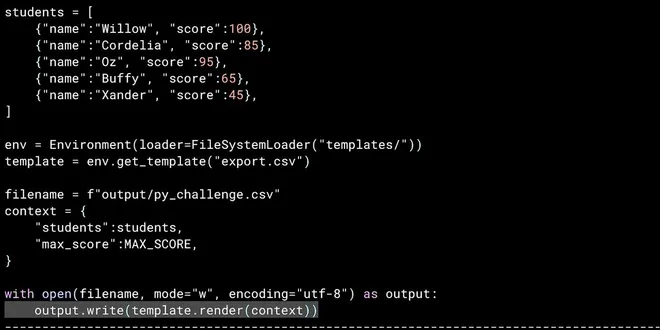
Introduction to Jinja Templating
Jinja is a text templating language. It allows you to process a block of text, insert values from a context dictionary, control how the text flows using conditionals and loops, modify inserted data wi...
📚 Read more at Real Python🔎 Find similar documents

Prompt Management Using Jinja
A guide on how Jinja2 templates can be used to manage prompts Image generated using ChatGPT This article is free to read. But, your contributions help me keep studying and creating content for you 😊...
📚 Read more at Towards AI🔎 Find similar documents

What is Jinja Templating in Django? A Comprehensive Guide for Beginners and Experts
Learn How Jinja Templating Transforms Django Projects with Powerful Code Snippets and Real-World Applications What is Jinja Templating in Django? A Comprehensive Guide for Beginners and Experts Intro...
📚 Read more at Python in Plain English🔎 Find similar documents
Quiz: Primer on Jinja Templating
In this quiz, you'll test your understanding of Jinja templating. Jinja is a powerful tool for building rich templates in Python web applications, and it can also be used to create text files with pro...
📚 Read more at Real Python🔎 Find similar documents

Take Full Control of Your Python Plots with Jinja
Next time you want to make a fully customized plot in Python ditch matplotlib and try Jinja. Here's a short tutorial to help you get started.
📚 Read more at Towards Data Science🔎 Find similar documents

Jinja2 in zope
Jinja2 in zope April 4, 2009 This was originally posted on blogger here . Getting Django Tempates inside of zope is not trivial. Yet getting Jinja2 to run inside of zope is easy! Use easy_install (or ...
📚 Read more at Daniel Roy Greenfeld Blog🔎 Find similar documents

Jinja2 Quick Load Function
Jinja2 Quick Load Function June 12, 2014 It seems like that for every few weeks I find myself needing to generate something out of a template while working outside a framework. For this task, my prefe...
📚 Read more at Daniel Roy Greenfeld Blog🔎 Find similar documents

Constructing Python Library APIs & Tackling Jinja Templating | Real Python Podcast #164
What principles should you consider when designing a Python library? How do you construct a library API that is understandable and easy to use? This week on the show, Christopher Trudeau is here, brin...
📚 Read more at Real Python🔎 Find similar documents
Django-Ninja: Built-in Django Feels Like FastAPI
Django is the web framework most widely used by Python developers. Django offers a powerful toolkit for creating web applications, making it easier for developers to create complex web applications ef...
📚 Read more at Better Programming🔎 Find similar documents

Tired of the slow speed of Django? Let's try Django Ninja! Part -1
Django Ninja: A Simple Introduction Created by Vitalik , Django Ninja is a more performant, minimalistic approach to API development compared to the traditional Django. With Django Ninja, you can buil...
📚 Read more at Python in Plain English🔎 Find similar documents
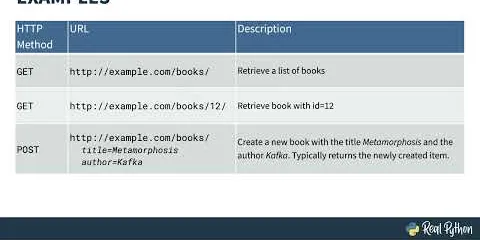
Starting With REST APIs and Django Ninja
The Django Ninja library is a FastAPI-inspired tool kit for turning Django views into REST API endpoints with very little extra code. Along the way, you’ll be using curl, a command-line tool that allo...
📚 Read more at Real Python🔎 Find similar documents
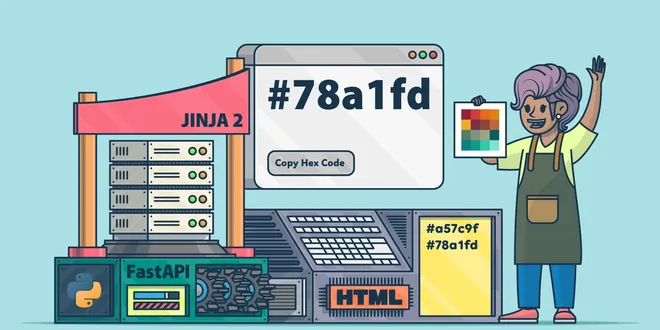
How to Serve a Website With FastAPI Using HTML and Jinja2
Use FastAPI to render Jinja2 templates and serve dynamic sites with HTML, CSS, and JavaScript, then add a color picker that copies hex codes.
📚 Read more at Real Python🔎 Find similar documents