


Artificial Intelligence (AI) has revolutionized various fields, including decision-making processes and data analysis. One innovative approach involves using models that integrate large language models (LLMs) with decision frameworks, allowing for efficient processing of complex inputs. These models can evaluate multiple options simultaneously, leveraging advanced techniques like softmax scoring to determine probabilities for each choice. Additionally, the design of such models ensures that they can handle long inputs effectively, making them suitable for diverse applications, from customer support to data-driven decision-making. Understanding these models is crucial for harnessing the full potential of AI in practical scenarios.

Build a Jev-Style Decision Model from an LLM, Part 4: Letting the Backbone Learn, Then Giving It…
Build a Jev-Style Decision Model from an LLM, Part 4: Letting the Backbone Learn, Then Giving It Eyes Letting the backbone learn with LoRA and then giving the same scoring head images to read. Photo ...
📚 Read more at Towards AI🔎 Find similar documents

Build a Jev-Style Decision Model from an LLM, Part 3: Training the Jev Head
How four vectors become probabilities: the pointer head that scores the options, how it is trained and how far a frozen backbone can take it. Photo by Alex Knight on Unsplash Where Part 2 left off Pa...
📚 Read more at Towards AI🔎 Find similar documents

Why Google’s Small EmbeddingGemma 2 Model Deserves More Attention
EmbeddingGemma 2 packs text, code, image, video and audio search into 270M to 740M parameters. See what it does well and where it falls… Continue reading on Towards AI
📚 Read more at Towards AI🔎 Find similar documents

Build a Jev-Style Decision Model from an LLM, Part 2: Opening the Model
What is inside a hybrid vision-language model, what that rules out and how to feed it a decision. Photo by Tim Mossholder on Unsplash Where Part 1 left off Build a Jev-Style Decision Model from an LL...
📚 Read more at Towards AI🔎 Find similar documents

Copilot’s Fabric Token Rates Dropped. On October 1, Consumption Changes Again.
As of 18 September 2026, Microsoft’s public Copilot-in-Fabric documentation lists 100 CU seconds per 1,000 input tokens, 10 CU seconds per… Continue reading on Towards AI
📚 Read more at Towards AI🔎 Find similar documents

I Built a Code Search Engine With EmbeddingGemma 2 in 80 Lines of Python
Semantic code search that runs locally. Chunk, embed, and search your repo by meaning with EmbeddingGemma 2. Continue reading on Towards AI
📚 Read more at Towards AI🔎 Find similar documents

Sophi Harness — Calling in a subcontractor: subagents as just another Tool
Series: Building SoPhi — a Kotlin Agent Harness — Article 08 A general contractor who needs an electrician doesn’t invent a new business process to get one. They make a phone call, describe the job, ...
📚 Read more at Towards AI🔎 Find similar documents
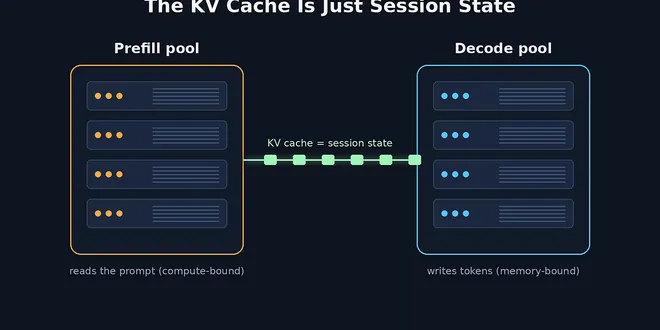
The KV Cache Is Just Session State: Disaggregated Inference for Backend Engineers
Prefill, decode, and why routing an LLM request is closer to routing a shopping cart than a stateless API call Disclosure: I drafted parts of this article with AI writing tools. I edited all of it, c...
📚 Read more at Towards AI🔎 Find similar documents

Jakob’s Law in the Age of AI Chat: 5 Rules for Designers
Your users already learned how to use AI from a chat box, so here is how to design for that habit without trapping them in it. Continue reading on Towards AI
📚 Read more at Towards AI🔎 Find similar documents

Gaussian Splatting for Self-Driving Simulation, Built in Plain PyTorch on a Laptop GPU
Author: Tamoghna Das Featured image: Left: a camera photo not used in training. Right: the same view, rendered from the trained 3D Gaussian model. License plates blurred. Source: Image by the author, ...
📚 Read more at Towards AI🔎 Find similar documents

17 Days with Jev: I Put a Sub-Second “System One” AI on a Real Trading Account
Jev doesn’t write text. It reads a state, answers typed questions and hands back probabilities in a third of a second. Here’s how it works, how to build with it, and what happened when it traded real...
📚 Read more at Towards AI🔎 Find similar documents
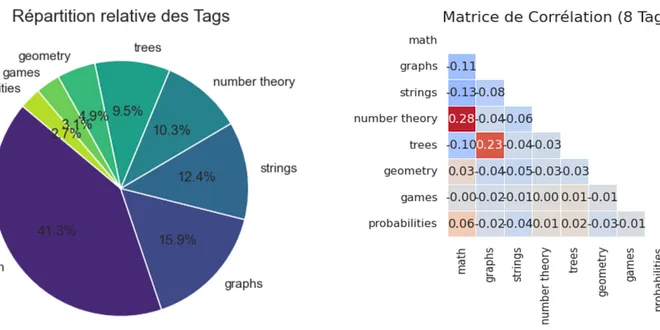
Multi-Label Classification of Algorithmic Exercises: From Logistic regression, to Classifier Chains…
Multi-Label Classification of Algorithmic Exercises: From Logistic regression, to Classifier Chains to CodeBERT In the world of competitive programming, platforms like Codeforces host vast catalogs o...
📚 Read more at Python in Plain English🔎 Find similar documents