

Data Structures and Information Retrieval in Python
“Data Structures and Information Retrieval in Python” delves into the crucial aspects of managing data efficiently and retrieving information effectively using Python. The document explores the significance of data structures in organizing and storing data, highlighting their role in optimizing information retrieval processes. It discusses how Python’s capabilities can be leveraged to implement various data structures and retrieval algorithms. By emphasizing the importance of structuring data for efficient retrieval, the document aims to provide insights into enhancing data management practices and improving information access in Python programming.
 Visit Data Structures and Information Retrieval in Python
Quiz 3
BEFORE YOU START THIS QUIZ: Click on “Copy to Drive” to make a copy of the quiz, Click on “Share”, Click on “Change” and select “Anyone with this link can edit” Click “Copy link” and Paste the link i...
📚 Read more at Data Structures and Information Retrieval in Python🔎 Find similar documents

Introduction
Data Structures and Information Retrieval in Python is an introduction to data structures and algorithms using a web search engine as a motivating example. It is based in part on Think Data Structure...
📚 Read more at Data Structures and Information Retrieval in Python🔎 Find similar documents

Algorithms
Click here to run this chapter on Colab Searching for anagrams In this notebook we’ll implement algorithms for two tasks: Testing a pair of words to see if they are anagrams of each other, that is, i...
📚 Read more at Data Structures and Information Retrieval in Python🔎 Find similar documents
Analysis of Algorithms
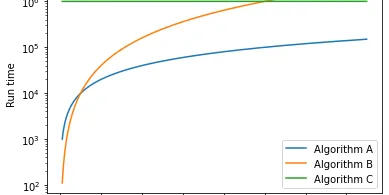
Click here to run this chapter on Colab Analysis of algorithms is a branch of computer science that studies the performance of algorithms, especially their run time and space requirements. See http:/...
📚 Read more at Data Structures and Information Retrieval in Python🔎 Find similar documents

Testing Order of Growth
Click here to run this chapter on Colab Analysis of algorithms makes it possible to predict how run time will grow as the size of a problem increases. But this kind of analysis ignores leading coeffi...
📚 Read more at Data Structures and Information Retrieval in Python🔎 Find similar documents

Quiz 1
BEFORE YOU START THIS QUIZ: Click on “Copy to Drive” to make a copy of the quiz, Click on “Share”, Click on “Change” and select “Anyone with this link can edit” Click “Copy link” and Paste the link i...
📚 Read more at Data Structures and Information Retrieval in Python🔎 Find similar documents

Generators and Iterators
Click here to run this chapter on Colab This chapter introduces generator functions, which are functions that yield a stream of values, rather than returning a single value. To demonstrate their use,...
📚 Read more at Data Structures and Information Retrieval in Python🔎 Find similar documents

Sets
Click here to run this chapter on Colab Set operators and methods The following example is based on Luciano Ramalho’s talk, Set Practice: Learning from Python’s set type . Checking membership is cons...
📚 Read more at Data Structures and Information Retrieval in Python🔎 Find similar documents

Recursion
Click here to run this chapter on Colab Example 1 Here’s an example of recursion from this section of Think Python . To understand recursion, it’s important to have a good mental model of what happen...
📚 Read more at Data Structures and Information Retrieval in Python🔎 Find similar documents

Quiz 2
BEFORE YOU START THIS QUIZ: Click on “Copy to Drive” to make a copy of the quiz, Click on “Share”, Click on “Change” and select “Anyone with this link can edit” Click “Copy link” and Paste the link i...
📚 Read more at Data Structures and Information Retrieval in Python🔎 Find similar documents

Depth First Search
Click here to run this chapter on Colab This notebook presents “depth first search” as a way to iterate through the nodes in a tree. This algorithm applies to any kind of tree, but since we need an e...
📚 Read more at Data Structures and Information Retrieval in Python🔎 Find similar documents
Search
Click here to run this chapter on Colab Linear Search Suppose you have a list. And you want to know whether an element appears in the list. You can use the in operator, which returns True or False . ...
📚 Read more at Data Structures and Information Retrieval in Python🔎 Find similar documents