

How to Think Like a Computer Scientist
The document source “How to Think Like a Computer Scientist” delves into the mindset and problem-solving approach required in the field of computer science. It explores the thought processes and methodologies essential for tackling complex computational challenges. By drawing insights from various aspects of programming, data augmentation, AI applications, and database management, the document emphasizes the importance of logical thinking, structured problem-solving, and efficient utilization of technology tools. Through practical examples and theoretical discussions, it aims to cultivate a strategic and analytical mindset akin to that of a proficient computer scientist.
 Visit How to Think Like a Computer Scientist
Foreword
Foreword By David Beazley As an educator, researcher, and book author, I am delighted to see the completion of this book. Python is a fun and extremely easy-to-use programming language that has steadi...
📚 Read more at How to Think Like a Computer Scientist🔎 Find similar documents

Copyright Notice
Copyright Notice Copyright (C) Jeffrey Elkner, Allen B. Downey and Chris Meyers. Permission is granted to copy, distribute and/or modify this document under the terms of the GNU Free Documentation Lic...
📚 Read more at How to Think Like a Computer Scientist🔎 Find similar documents

Preface
Preface By Jeffrey Elkner This book owes its existence to the collaboration made possible by the Internet and the free software movement. Its three authors—a college professor, a high school teacher, ...
📚 Read more at How to Think Like a Computer Scientist🔎 Find similar documents

Contributor List
Contributor List To paraphrase the philosophy of the Free Software Foundation, this book is free like free speech, but not necessarily free like free pizza. It came about because of a collaboration th...
📚 Read more at How to Think Like a Computer Scientist🔎 Find similar documents

1. The way of the program
1. The way of the program The goal of this book is to teach you to think like a computer scientist. This way of thinking combines some of the best features of mathematics, engineering, and natural sci...
📚 Read more at How to Think Like a Computer Scientist🔎 Find similar documents

2. Variables, expressions and statements
2. Variables, expressions and statements 2.1. Values and data types A value is one of the fundamental things — like a letter or a number — that a program manipulates. The values we have seen so far ar...
📚 Read more at How to Think Like a Computer Scientist🔎 Find similar documents
3. Functions
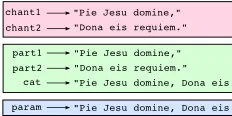
3. Functions 3.1. Definitions and use In the context of programming, a function is a named sequence of statements that performs a desired operation. This operation is specified in a function definitio...
📚 Read more at How to Think Like a Computer Scientist🔎 Find similar documents

4. Conditionals
4. Conditionals 4.1. The modulus operator The modulus operator works on integers (and integer expressions) and yields the remainder when the first operand is divided by the second. In Python, the modu...
📚 Read more at How to Think Like a Computer Scientist🔎 Find similar documents

5. Fruitful functions
5. Fruitful functions 5.1. Return values The built-in functions we have used, such as abs , pow , and max , have produced results. Calling each of these functions generates a value, which we usually a...
📚 Read more at How to Think Like a Computer Scientist🔎 Find similar documents

6. Iteration
6. Iteration 6.1. Multiple assignment As you may have discovered, it is legal to make more than one assignment to the same variable. A new assignment makes an existing variable refer to a new value (a...
📚 Read more at How to Think Like a Computer Scientist🔎 Find similar documents

7. Strings
7. Strings 7.1. A compound data type So far we have seen five types: int , float , bool , NoneType and str . Strings are qualitatively different from the other four because they are made up of smaller...
📚 Read more at How to Think Like a Computer Scientist🔎 Find similar documents

8. Case Study: Catch
8. Case Study: Catch 8.1. Getting started In our first case study we will build a small video game using the facilities in the GASP package. The game will shoot a ball across a window from left to rig...
📚 Read more at How to Think Like a Computer Scientist🔎 Find similar documents