


Non-Brand Data
“Non-Brand Data” delves into the realm of enterprise data management and AI applications, focusing on the challenges and solutions related to leveraging data beyond traditional branding contexts. The document explores topics such as the importance of understanding and utilizing diverse data sources, the pitfalls of treating data as static, and the necessity for AI systems to comprehend and interact with dynamic, living data. It also discusses the significance of secure knowledge base infrastructure, multi-tenancy architectures, and the role of technologies like Generative AI, Vector Embeddings, and Semantic Search in enhancing data understanding and retrieval processes.
 Visit Non-Brand Data
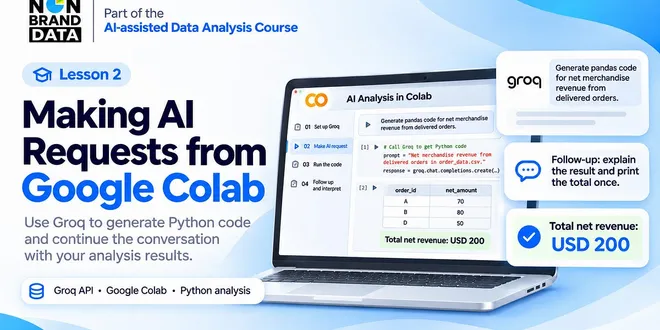
Lesson 2. Making AI Requests from Google Colab
Use Groq to generate Python code and continue the conversation with your analysis results.
📚 Read more at Non-Brand Data🔎 Find similar documents
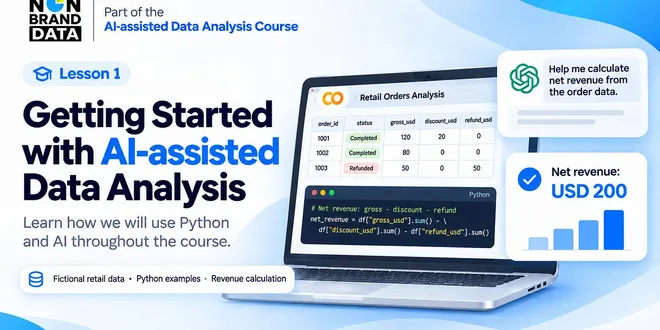
Lesson 1. Getting Started with AI-assisted Data Analysis
Learn how we will use Python and AI throughout the course.
📚 Read more at Non-Brand Data🔎 Find similar documents
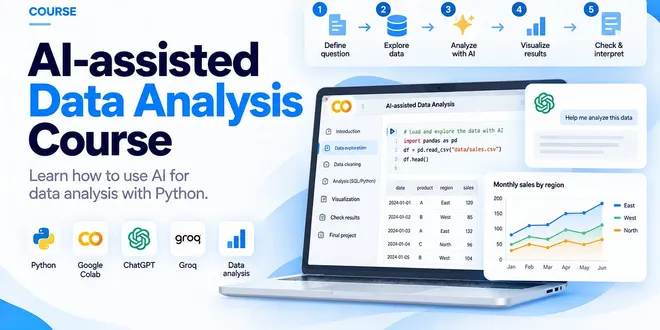
AI-assisted Data Analysis Course
Learn how to use AI for data analysis with Python.
📚 Read more at Non-Brand Data🔎 Find similar documents
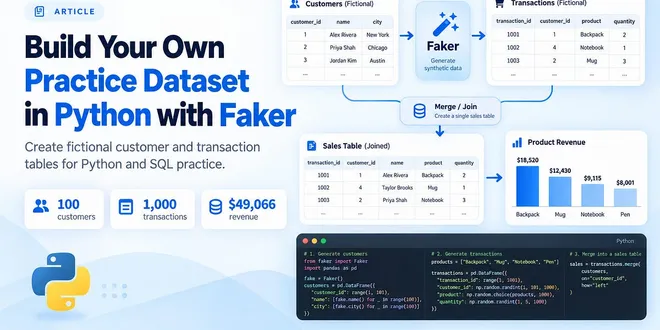
Build Your Own Practice Dataset in Python with Faker
Create fictional customer and transaction tables for your next Python and SQL exercise
📚 Read more at Non-Brand Data🔎 Find similar documents
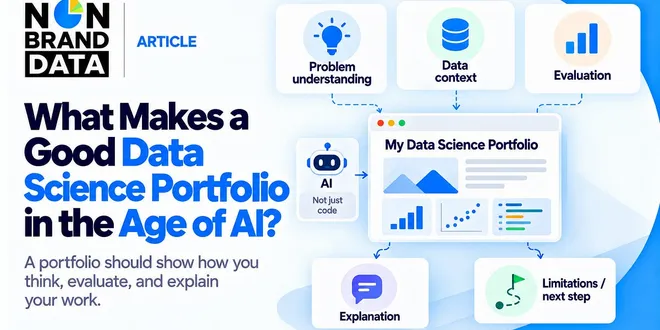
What Makes a Good Data Science Portfolio in the Age of AI?
Something you might overlook but important in the current era
📚 Read more at Non-Brand Data🔎 Find similar documents
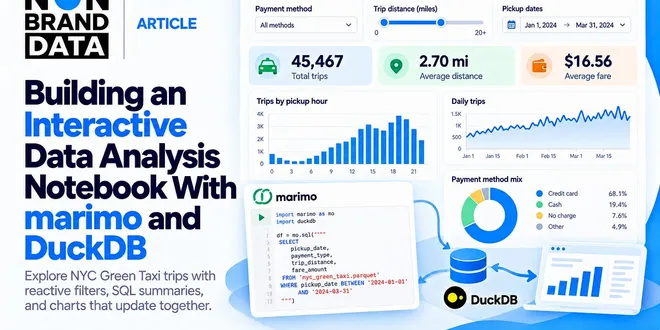
Building an Interactive Data Analysis Notebook With marimo and DuckDB
Learn to build modern dashboard in a simple way
📚 Read more at Non-Brand Data🔎 Find similar documents
Building a Multi-Asset Market Monitor with TickerLayer
Understand market data and learn how to work with it in Python
📚 Read more at Non-Brand Data🔎 Find similar documents
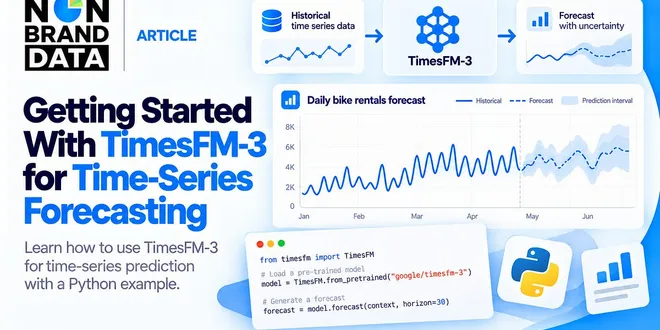
Getting Started With TimesFM-3 for Time-Series Forecasting
Learn how to use TimesFM-3 for time-series prediction with a Python example.
📚 Read more at Non-Brand Data🔎 Find similar documents
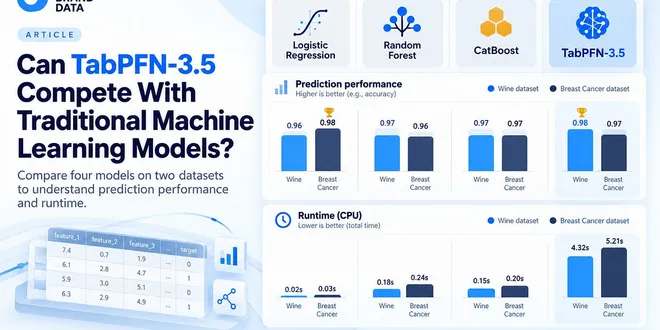
Can TabPFN-3.5 Compete With Traditional Machine Learning Models?
Compare four models on two datasets to understand their prediction performance and runtime.
📚 Read more at Non-Brand Data🔎 Find similar documents
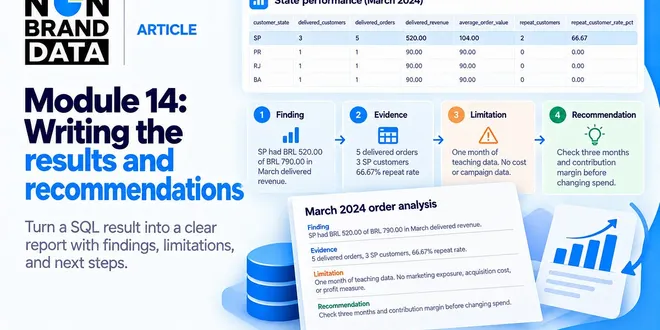
Module 14: Writing the results and recommendations
A SQL result can be correct and still make a weak report. The table gives the numbers, but the reader still needs to know what they mean and what they don't show.
📚 Read more at Non-Brand Data🔎 Find similar documents

Module 13: When a SQL query needs optimization
In this module, we will learn how to read a PostgreSQL query plan and decide whether an index is worth keeping.
📚 Read more at Non-Brand Data🔎 Find similar documents
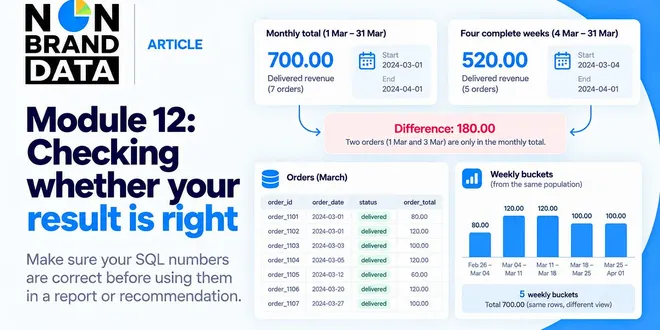
Module 12: Checking whether your result is right
Let's learn how to check a SQL result before we use it in a report or recommendation.
📚 Read more at Non-Brand Data🔎 Find similar documents