

train
A train is a mode of transportation that runs on tracks and is designed to carry passengers or freight over long distances. Trains are powered by various energy sources, including electricity, diesel, or steam, and are known for their efficiency and ability to transport large volumes of goods and people. The operation of trains involves complex systems, including scheduling, signaling, and safety protocols. In the context of machine learning and artificial intelligence, the term “train” also refers to the process of teaching a model to recognize patterns in data through iterative learning. This dual meaning highlights the significance of trains in both transportation and technology.

Railways
Convergence – CC BY-SA by beeveephoto Day 25–26 of 30DayMapChallenge: « Hexagons and « Transports (previously). Estimating the disappearance of railway lines in France. Config library(sf) library(glue...
📚 Read more at R-bloggers🔎 Find similar documents

A Gaijin’s Guide to the Tokyo Train System
The Tokyo train system is a logistical marvel to behold. With a population of roughly 14 million, coupled with being a bustling international business hub, a destination for many young Japanese…
📚 Read more at Towards Data Science🔎 Find similar documents

Self-Driving Train in 2021
After electrification and high speed, with the rise of AI, cloud computing, and big data, the fourth railway revolution is almost there.
📚 Read more at Towards Data Science🔎 Find similar documents

The Story of a Bad Train-Test Split
Splitting your dataset to train-test sets can sometimes be more complicated than one might expect
📚 Read more at Towards Data Science🔎 Find similar documents

A closer look into the Spanish railway passenger transportation pricing
As someone who lives and works in a Spanish city 400km away from home, I have found that the most convenient way to travel back and forth is to resort to the train. As a frequent user I have grown…
📚 Read more at Towards Data Science🔎 Find similar documents

Train script
If your train script works with torch.distributed.launch it will continue working with torchrun with these differences: No need to manually pass RANK , WORLD_SIZE , MASTER_ADDR , and MASTER_PORT . rdz...
📚 Read more at PyTorch documentation🔎 Find similar documents

Train Test Split — Explained in 5 Minutes
Understand why we need to perform the train test split. Continue reading on Python in Plain English
📚 Read more at Python in Plain English🔎 Find similar documents
Railway population
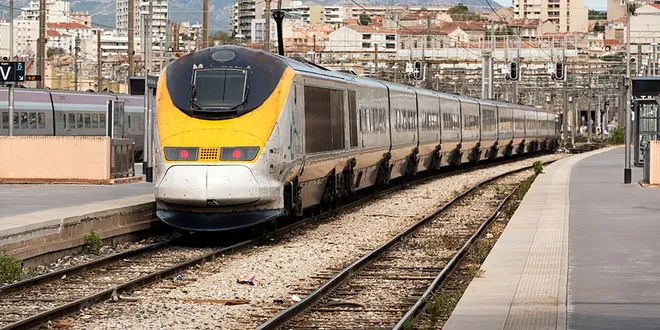
Eurostar 3213 and 3214 in Marseille-Saint-Charles in 2017 – CC-BY by Roel Hemkes The following map from 2024 by Simon C. Scherrer (via @freakonometrics) indicates that one-third of the Swiss populatio...
📚 Read more at R-bloggers🔎 Find similar documents
Analyzing train travel times and fares in Singapore
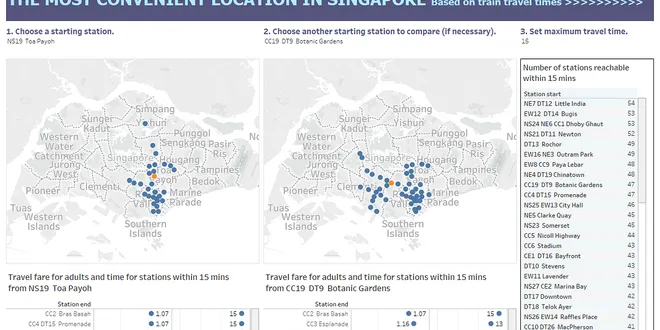
I set out to try to understand the accessibility of different train stations in Singapore and how travel times and fares vary by stations. The purpose of the analysis is to identify areas that are…
📚 Read more at Towards Data Science🔎 Find similar documents
Smart Public Transport
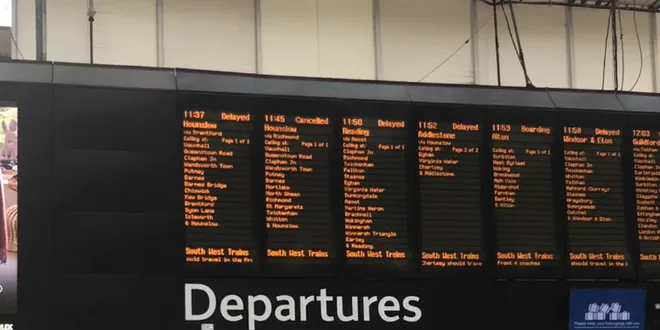
I’m a frequent public transport user; a bus to the tube station, one or two switches on the tube before boarding a train to the outskirts of London — that’s my journey into work every morning. On a…
📚 Read more at Towards Data Science🔎 Find similar documents

Waiting for a train with Einstein and Gödel
Waiting for a Train with Einstein and Gödel Gödel numbers, algorithms, and time Photo by Andrik Langfield on Unsplash The way humans experience time is fascinating and mysterious. Time is experienced...
📚 Read more at Towards Data Science🔎 Find similar documents

Using len(y) for Train Test Split
https://www.alvinang.sg/s/Various_Ways_of_Train_Test_Splits_with_Python_by_Dr_Alvin_Ang-2.ipynb This is part of a series on : Dr. Alvin Ang Various Ways of Train Test Splits with Python View list 5 st...
📚 Read more at Python in Plain English🔎 Find similar documents