


Nadam
Nadam is an advanced optimization algorithm that combines the benefits of Nesterov accelerated gradient and Adam optimization techniques. It is designed to improve the convergence speed and performance of machine learning models, particularly in deep learning applications. By leveraging momentum and adaptive learning rates, Nadam effectively navigates the loss landscape, allowing for more efficient training. This method is particularly useful in scenarios where traditional optimization algorithms may struggle, providing a robust alternative for practitioners seeking to enhance their model’s training efficiency and accuracy. Overall, Nadam represents a significant advancement in the field of optimization for machine learning.

NAdam
Implements NAdam algorithm. For further details regarding the algorithm we refer to Incorporating Nesterov Momentum into Adam . params ( iterable ) – iterable of parameters to optimize or dicts defini...
📚 Read more at PyTorch documentation🔎 Find similar documents

Gradient Descent Optimization With Nadam From Scratch
Last Updated on October 12, 2021 Gradient descent is an optimization algorithm that follows the negative gradient of an objective function in order to locate the minimum of the function. A limitation ...
📚 Read more at Machine Learning Mastery🔎 Find similar documents

RAdam
Implements RAdam algorithm. For further details regarding the algorithm we refer to On the variance of the adaptive learning rate and beyond . params ( iterable ) – iterable of parameters to optimize ...
📚 Read more at PyTorch documentation🔎 Find similar documents

Nomad
Nomad is different from the previous two solutions, as it is not focused solely on containers. It is a general-purpose orchestrator with support for Docker, Podman, Qemu Virtual Machines, isolated for...
📚 Read more at Software Architecture with C plus plus🔎 Find similar documents
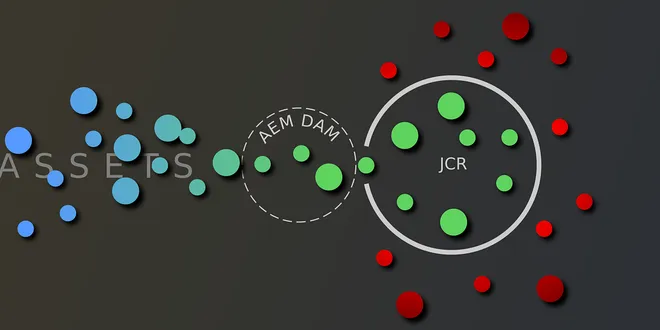
Adobe Experience Manager: Forcing the use of the DAM for images by closing loopholes
The DAM (Digital Asset Manager) is AEM’s asset management system and should be the single point of entry for all assets into the AEM platform and the one-stop-shop for using those assets in content…
📚 Read more at Level Up Coding🔎 Find similar documents

Adamax
Implements Adamax algorithm (a variant of Adam based on infinity norm). For further details regarding the algorithm we refer to Adam: A Method for Stochastic Optimization . params ( iterable ) – itera...
📚 Read more at PyTorch documentation🔎 Find similar documents

‘NaN’ You May Not Know
When we use Reflect.getOwnPropertyDescriptor to get the property descriptor of NaN, it tells us that NaN is not deleteable, not changeable, not enumerable. So when we try to delete it using…
📚 Read more at Level Up Coding🔎 Find similar documents

What is the type of NaN?
A while ago I was answering an interesting question on Stack Overflow about the type of NaN. And indeed if you type in your browser console typeof NaN === 'number' you'll get true. The comments to…
📚 Read more at Level Up Coding🔎 Find similar documents

Bridging the Digital Divide: Umar Isah Adam on Expanding R Access for Kano, Nigeria Students
Umar Isah Adam, the founder and organizer of the R User Group Kano, Nigeria, spoke with the R Consortium during the pandemic about his efforts to engage the next generation... The post Bridging the Di...
📚 Read more at R-bloggers🔎 Find similar documents

Nomad Explained: The Flexible Orchestrator for Containers, Microservices, and Legacy…
🚀 Nomad Explained: The Flexible Orchestrator for Containers, Microservices, and Legacy Applications Learn how Nomad uses infrastructure-as-code, intelligent scheduling, and unified workload manageme...
📚 Read more at Python in Plain English🔎 Find similar documents

torch.isnan
Returns a new tensor with boolean elements representing if each element of input is NaN or not. Complex values are considered NaN when either their real and/or imaginary part is NaN. input ( Tensor ) ...
📚 Read more at PyTorch documentation🔎 Find similar documents