

how to build rag pipelines
Building Retrieval-Augmented Generation (RAG) pipelines is essential for enhancing the performance of AI systems in generating accurate and contextually relevant responses. RAG combines retrieval mechanisms with generative models, allowing systems to access vast amounts of information and synthesize coherent answers. The process involves chunking documents into manageable pieces, indexing them through embedding vectors in a vector database, and utilizing similarity metrics to retrieve relevant data. Additionally, implementing a feedback loop for continuous learning from user interactions is crucial for improving the accuracy and relevance of responses over time. This approach ensures that AI systems remain effective in dynamic environments.
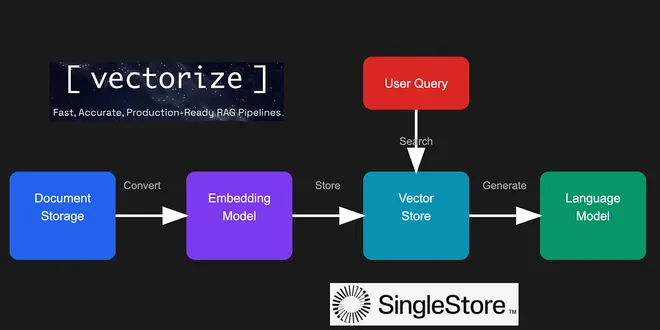
A Practical Approach to Building Advanced RAG Pipelines with Confidence!
Image by author Pavan Belagatti In the world of AI, Retrieval-Augmented Generation (RAG) pipelines have become essential for delivering accurate and contextually relevant responses. This blog will exp...
📚 Read more at Level Up Coding🔎 Find similar documents
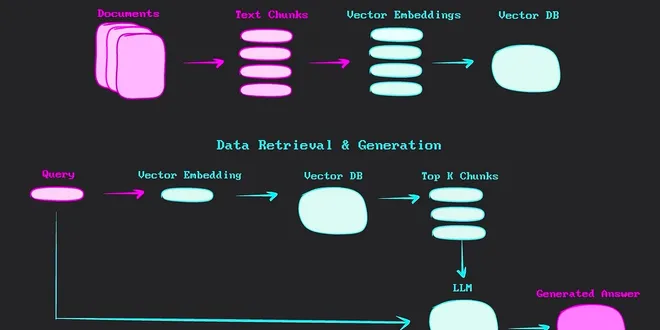
How I Built My First RAG Pipeline
A RAG pipeline to answer all of your recruiters’ questions for you! Continue reading on Towards Data Science
📚 Read more at Towards Data Science🔎 Find similar documents

How to Build a Production-Grade RAG Pipeline
Introduction One of the most in-demand skills in AI engineering is retrieval-augmented generation (RAG). RAG is a technique that improves the responses of LLMs by retrieving relevant information from ...
📚 Read more at Towards AI🔎 Find similar documents

How To Optimize Your RAG Pipelines
The RAG pipeline Indexing optimization Query optimization Retrieval optimization Document selection optimization Context optimization The RAG pipeline The idea with Retrieval Augmented Generation (RAG...
📚 Read more at The AiEdge Newsletter🔎 Find similar documents

Stop Building RAG Pipelines That Lie to You
The Ultimate 3 Boring Decisions That Made My RAG Pipeline Actually Production-Ready Continue reading on Towards AI
📚 Read more at Towards AI🔎 Find similar documents
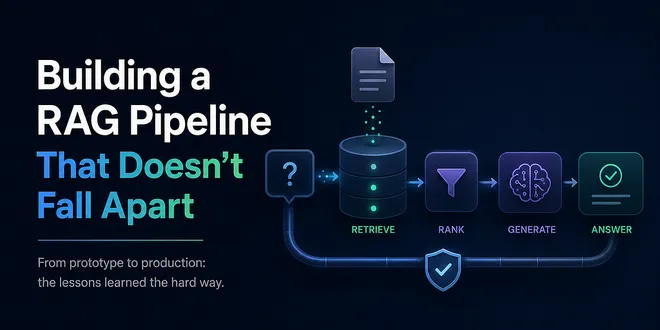
Building a RAG Pipeline That Doesn’t Fall Apart
Source: Created by Author I thought we were done in two weeks. The prototype was working. You typed a question, the system found the right documents, the LLM synthesized a clean answer. Our internal S...
📚 Read more at Towards AI🔎 Find similar documents

So, You Want To Improve Your RAG Pipeline
With roughly a few lines of code and a quick-start guide to a framework like LlamaIndex, anyone can construct a chatbot to chat with your private documents or even better, can build a new entire agent...
📚 Read more at Towards AI🔎 Find similar documents

RAG Pipeline : A Complete Guide
What is RAG? Continue reading on Towards AI
📚 Read more at Towards AI🔎 Find similar documents
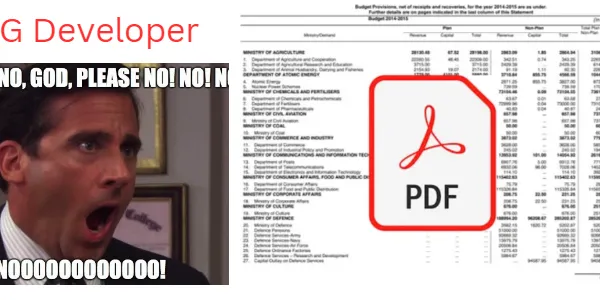
RAG Pipeline Pitfalls: The Untold Challenges of Embedding Table
But that’s usually a Proof of Concept (PoC) stage, where things are all rainbows and unicorns. Now, moving from that PoC to something more solid, that’s where the real adventure begins. It’s one thing...
📚 Read more at Towards AI🔎 Find similar documents

Exploring End-to-End Evaluation of RAG Pipelines
RAG Pipelines RAG (Retrieval Augmented Generation) is a paradigm for augmenting LLM with custom data. RAG pipeline is a preferred term over RAG app, mainly because a RAG app generally consists of two ...
📚 Read more at Better Programming🔎 Find similar documents
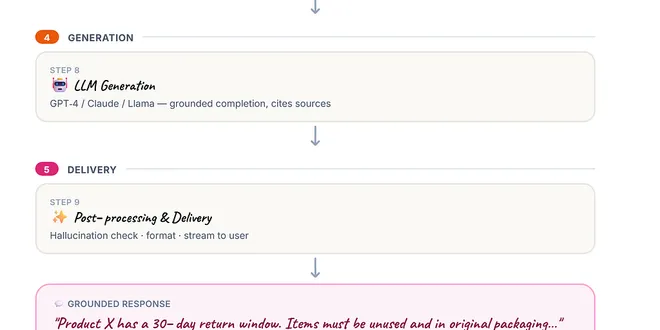
Stop Blaming Your RAG Pipeline. 16 Techniques That Actually Work in Production
A complete guide to the RAG pipeline, from query intake to response delivery. Every code block is runnable as written. When a RAG system gives a wrong or vague answer, the first instinct is to blame t...
📚 Read more at Level Up Coding🔎 Find similar documents
The Complete RAG Playbook (Part 1): Building Your First RAG Pipeline
I’ve unlocked this for everyone: Link Continue reading on Towards AI
📚 Read more at Towards AI🔎 Find similar documents