

Python bitwise operators
Python bitwise operators are essential tools for manipulating individual bits within binary data. These operators, including AND, OR, XOR, NOT, and bit shifts, allow developers to perform low-level data handling efficiently. By working directly with bits, programmers can implement algorithms for tasks such as compression, encryption, and error detection. Bitwise operations are particularly useful in scenarios where performance and memory efficiency are critical, such as in embedded systems or when controlling hardware. Understanding these operators enhances a programmer’s ability to optimize code and manage data at a granular level, making them a valuable skill in Python programming.

Bitwise Operators in Python
Bitwise Operators allow you to perform operations on binary numbers. The values are automatically converted to binary and then the logic is applied to them. The output is also converted back from bina...
📚 Read more at Renan Moura – Software Engineering🔎 Find similar documents

Bitwise Operators in Python
Learn how to use Python's bitwise operators to manipulate individual bits of data at the most granular level.
📚 Read more at Real Python🔎 Find similar documents

Quiz: Bitwise Operators in Python
Test your understanding of Python bitwise operators by revisiting core concepts like bitwise AND, OR, XOR, NOT, shifts, bitmasks, and their applications.
📚 Read more at Real Python🔎 Find similar documents
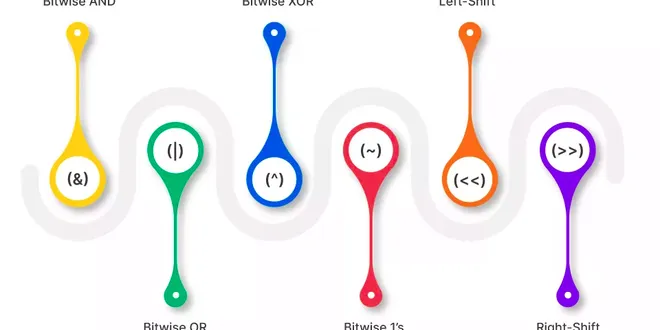
Bitwise Operations in Python and C part 1: More than just a bit wise
Bitwise operations provide developers with a set of convenient tools to manipulate the original bit patterns of binary numbers/variables. Some developers might have skimmed through them without giving...
📚 Read more at Python in Plain English🔎 Find similar documents

Bitwise Operators: Python Complete Course — Part 15
Learn the bitwise operators in Python with nice visual and code examples Continue reading on Python in Plain English
📚 Read more at Python in Plain English🔎 Find similar documents
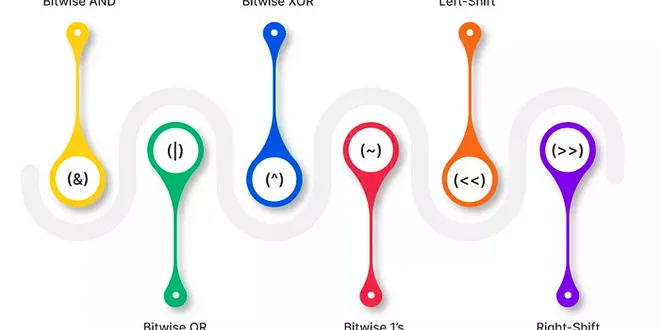
Bitwise Operations in Python and C/C++ part 2: more useful operators
In my previous article , I introduced three basic bitwise operators and their not-so-obvious use cases. There are three more useful bitwise operators that can help increase our code efficiency: Bitwis...
📚 Read more at Python in Plain English🔎 Find similar documents

Know More About Operators in Python
Definition of arithmetic, relational, bitwise, logical, assignment, membership, and identity operators Photo by Karolina Grabowska from Pexels There are several concepts that always exist in any prog...
📚 Read more at Python in Plain English🔎 Find similar documents
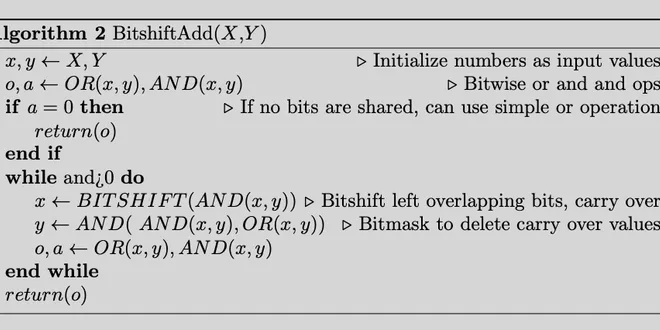
Using Bitwise Operations to Improve Python Performance
Or why a little C++ can get you a long way Continue reading on Better Programming
📚 Read more at Better Programming🔎 Find similar documents

torch.bitwise_or
Computes the bitwise OR of input and other . The input tensor must be of integral or Boolean types. For bool tensors, it computes the logical OR. input – the first input tensor other – the second inpu...
📚 Read more at PyTorch documentation🔎 Find similar documents

7 Mind-Blowing Arithmetic Operators in Python
Understanding the arithmetic operators in Python. Do you know Python has different operators for performing a specific task on the operands? But one of the most popular and commonly used operators ar...
📚 Read more at Python in Plain English🔎 Find similar documents

The Bitwise and Logical Operators
The Java language provides 4 operators that perform bitwise or logical operations on integer or boolean operands. The complement ( ~ ) operator is a unary operator that performs a bitwise or logical i...
📚 Read more at Essential Java🔎 Find similar documents

torch.bitwise_and
Computes the bitwise AND of input and other . The input tensor must be of integral or Boolean types. For bool tensors, it computes the logical AND. input – the first input tensor other – the second in...
📚 Read more at PyTorch documentation🔎 Find similar documents