

Range loop python
A range loop in Python is a powerful construct that allows for efficient iteration over a sequence of numbers. The range() function generates a series of integers, which can be customized with specified start, stop, and step values. This function is particularly useful in for loops, enabling developers to execute a block of code a defined number of times without manually managing loop indices. Unlike traditional loops in other programming languages, Python’s for loop operates more like an iterator, simplifying the process of accessing elements in a sequence and enhancing code readability and maintainability.

Exploring Python Range Function
The range() is an in-built function in Python. It returns a sequence of numbers starting from zero and increment by 1 by default and stops before the given number. As it returns a sequence of…
📚 Read more at Towards Data Science🔎 Find similar documents

From Beginner to Pro: Mastering Python’s range() Function
One of the most powerful tools you will use as a programmer in Python is the range() function. It creates an array-like of numbers, and is thus built-in for loops and other situations you may need a s...
📚 Read more at The Pythoneers🔎 Find similar documents

Python For Loop Range — How to Loop Through a Range in Python
Discover Python for loop range: master looping through ranges effortlessly with expert tips and techniques. Continue reading on Python in Plain English
📚 Read more at Python in Plain English🔎 Find similar documents

Python range(): Represent Numerical Ranges
Master the Python range() function and learn how it works under the hood. You most commonly use ranges in loops. In this tutorial, you'll learn how to iterate over ranges but also identify when there ...
📚 Read more at Real Python🔎 Find similar documents
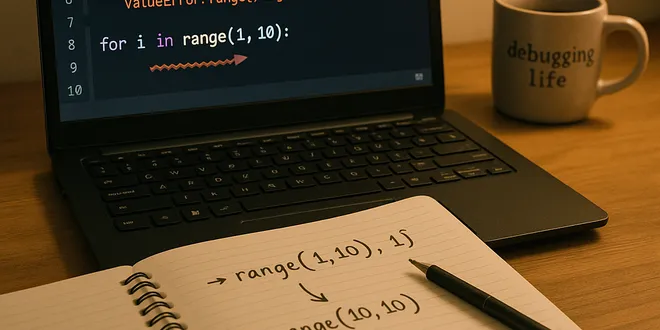
Don’t Make These Mistakes With Python Ranges…
I still remember the day I thought I had understood Python’s range() function. It looked simple… like something that would never cause any trouble. But it did. A lot. And the worst part… the bugs didn...
📚 Read more at Python in Plain English🔎 Find similar documents
How to Use range() in Python
What if you want to generate a list of numbers? You can use the built-in range() function. There are three ways you can call range(): 1. range(stop) takes one argument. 2. range(start, stop) takes two...
📚 Read more at Real Python🔎 Find similar documents

Chapter 9. Loops in Python
Introduction In Python, loops are used to execute a block of code repeatedly. The for loop is used to iterate over a sequence such as a list, tuple, dictionary, set, or string, executing a set of stat...
📚 Read more at Python in Plain English🔎 Find similar documents

How to Create Python range() in JavaScript
If you’re not familiar with Python, range() refers to the use of the range type to create an immutable sequence of numbers. By using the Array constructor, fill and map, you could work out a simple…
📚 Read more at Better Programming🔎 Find similar documents
"For Each" Loops in Python with enumerate() and range()
https://dbader.org/python-tricks ► Write clean and Pythonic for, while, and "for each" loops in Python One of the easiest ways to spot a developer with a background in C-style languages who only recen...
📚 Read more at Real Python🔎 Find similar documents
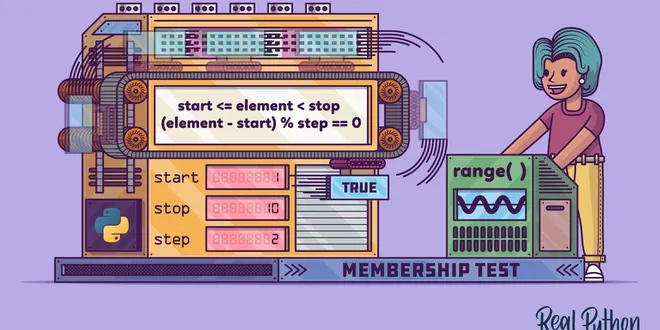
Why Are Membership Tests So Fast for range() in Python?
In Python, range() is most commonly used in for loops. However, ranges have some other use cases too, as they share many properties with lists. In this tutorial, you'll explore why it's so fast to per...
📚 Read more at Real Python🔎 Find similar documents

Python: Stop Using range() Blindly in For Loops
Even though there’s nothing wrong with using range(), you shouldn’t use it blindly. There is a way cleaner option that quite often fits the need better. This alternative is the enumerate() function…
📚 Read more at Python in Plain English🔎 Find similar documents

How to Loop with Indexes in Python
Looping is a fundamental concept in programming, and Python provides several ways to loop through data structures. In this comprehensive guide, we’ll explore how to loop with indexes in Python, coveri...
📚 Read more at Python in Plain English🔎 Find similar documents